The colour drains as the night falls, replaced by darkness and shades of grey. The sound of the torrent intensifies, threatening yet alluring. The beaten water rages in a shaft of light, foaming and frothing. Ephemeral bubbles coalesce and explode, the remnants swept downstream to form carpets of foam. The stained water, black under the dead weight of the cool night air.
My gaze alights on the water, on this spot on the river, here where the water is turning around, where the currents turn the water in tightening circles. I can’t turn away. I want to feel time twist as I watch these spirals forming. I want to feel time twist and myself turning as I watch them disappear (Horn 2011).
Captivated by the white foam and bubbles, contrasting against the dark, spiralling currents, I use analogue, digital and camera-less photography to create photographic works and objects in situ. Stony Creek runs through the town of Halls Gap in Gariwerd, home to the Djab Wurrung and Jardwadjali people of Victoria, Australia. Normally placid, but now menacing after recent rain, panoramic, black and white photographs accentuate the motion of rafts of foam as they swirl above the dark, tannin-stained water (Night River [1] and [2]). A composite of three images set against a black background traces the journey of a single bubble against a constantly changing procession of bubbles (Night River [3]).
The upper reaches of Stony Creek have an inherent violence, contrasting with the implicit violence and power of Another Water: The River Thames, for Example (Horn 2011). I print out images on Japanese washi paper, originally drained and formed by hand from large vats of pulp (nagashizuki), before I return them to the primordial vat of the river. Violently swept downstream, stained by the tannin, snagged and torn or gently twisted and creased by the force of the water. Laid out to dry, now moulded by the river, rephotographed and sculptured into photographic objects using the marks inflicted by the river (Night River [4], [6], [8], [10], [12]).
Further downstream the flow is less frenetic, the water and foam become a tool for my photographs. Inspired by the photograms of Susan Derges (2010), I immerse photographic paper into the cold water or conceal it behind mounds of foam and expose it to the light. Processed beside the river in the vast darkroom of the night sky, they become embedded in that time and place (Night River [5], [7], [9], [11]).
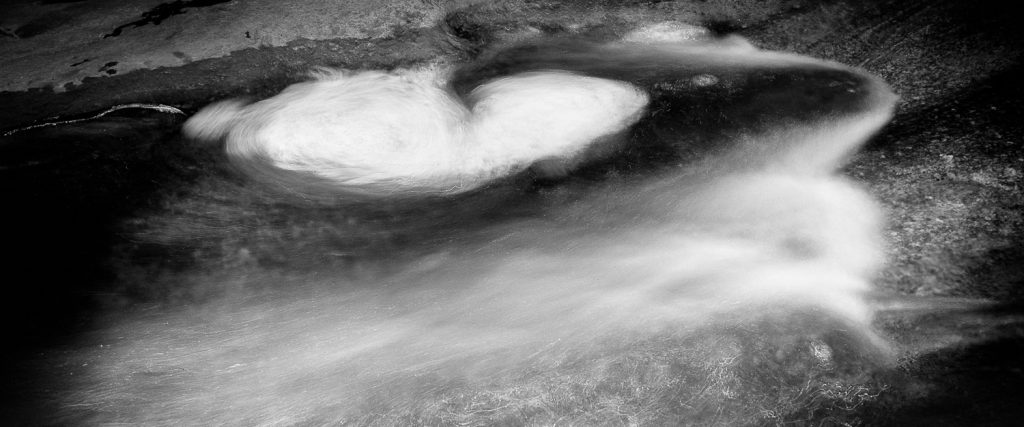
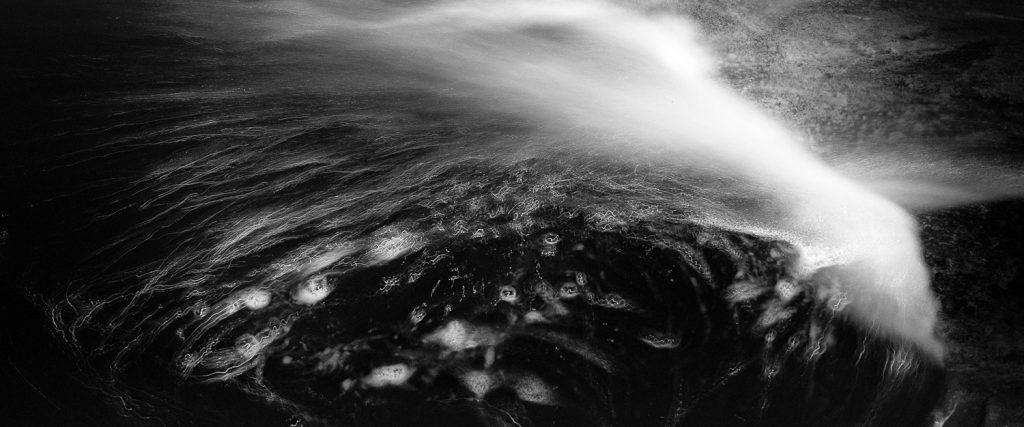
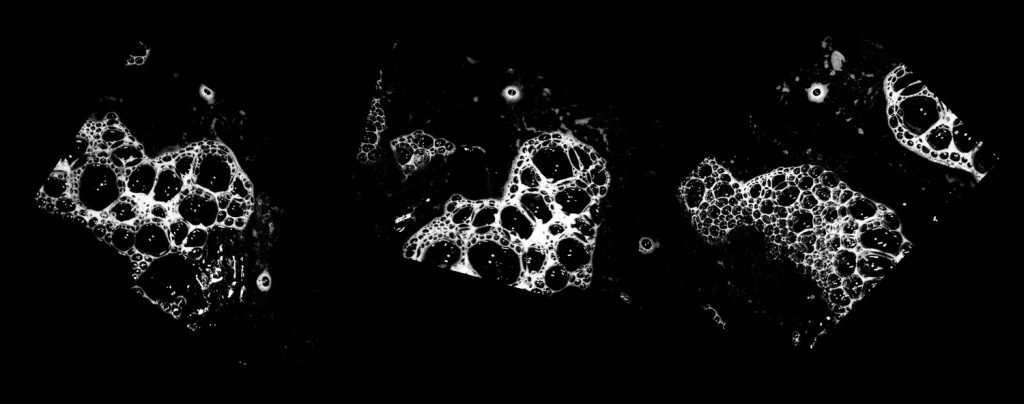
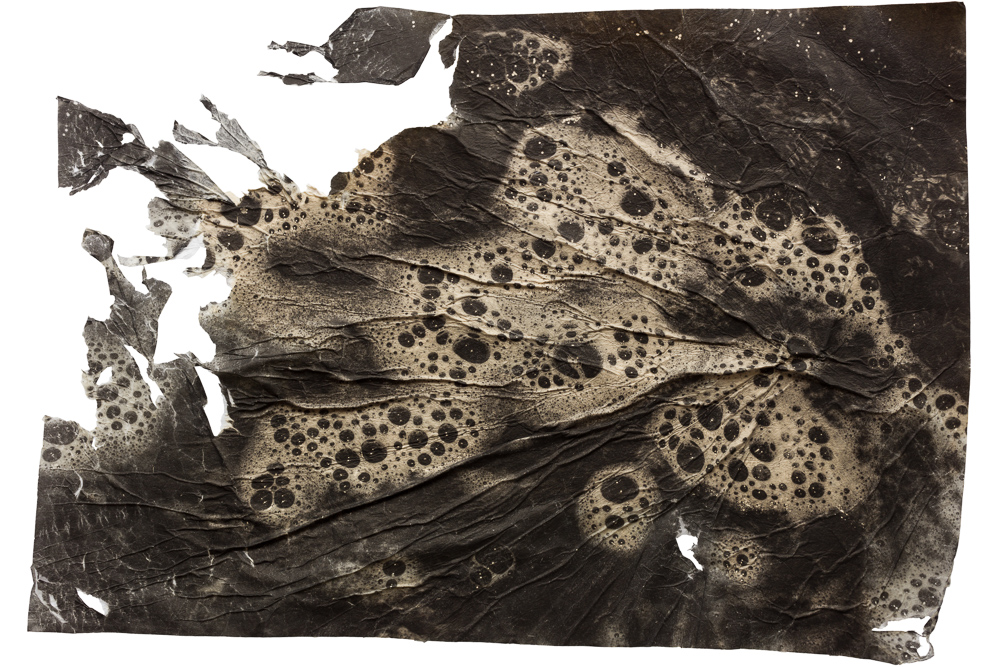
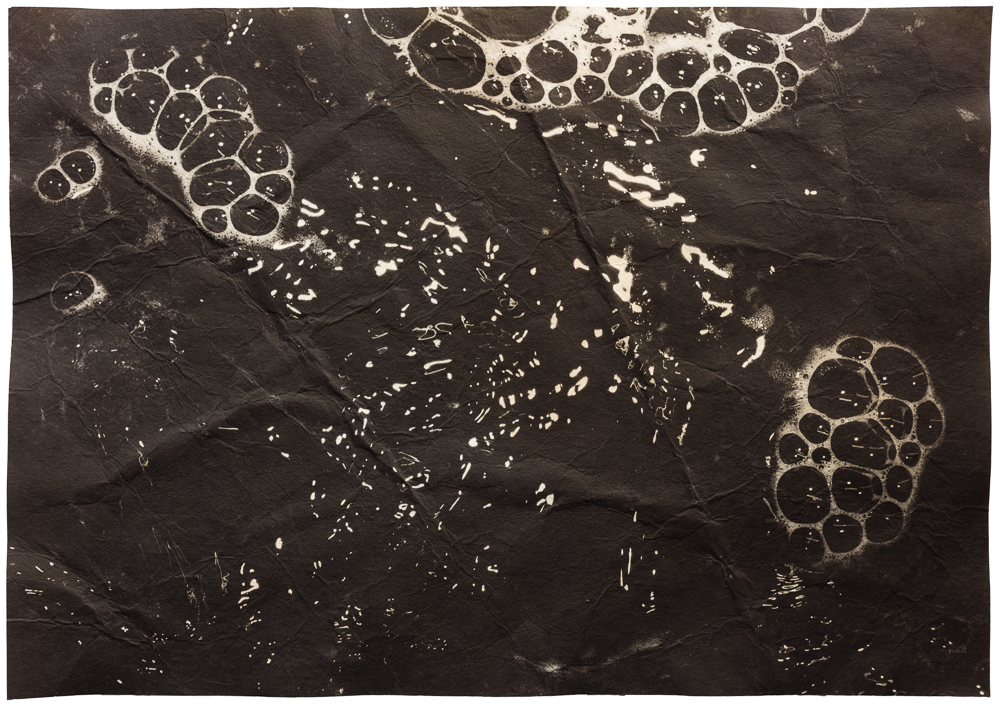
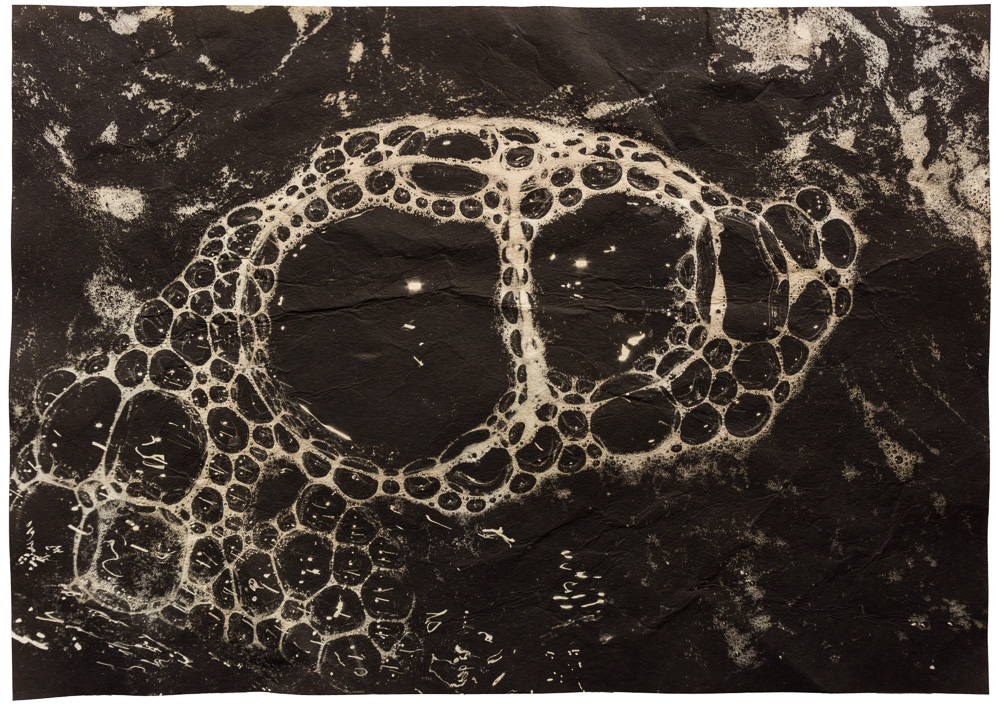
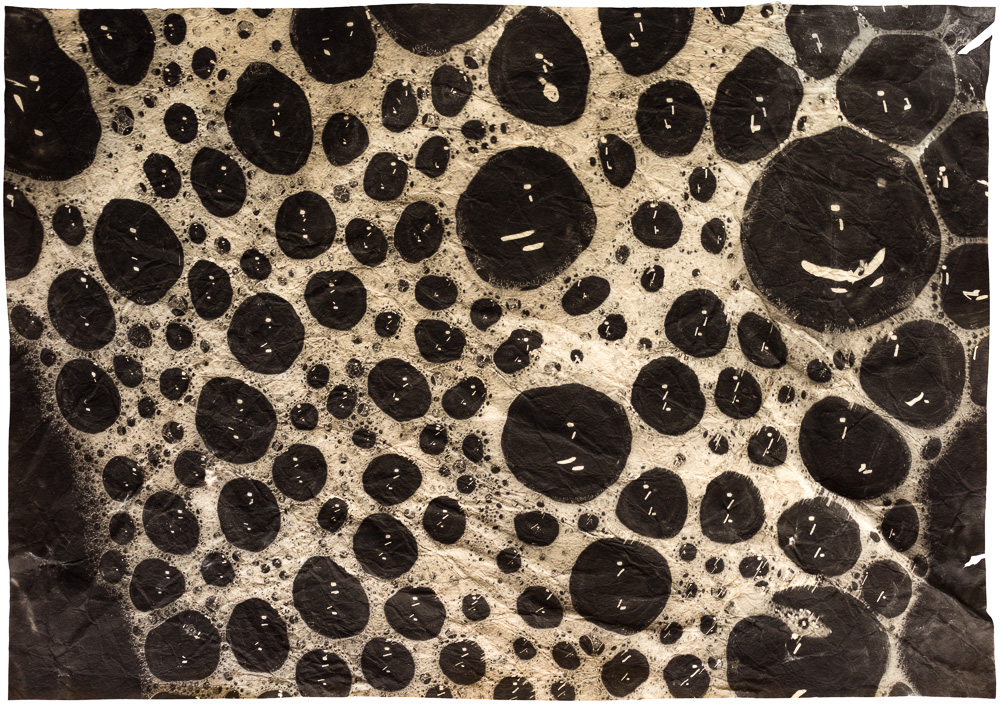
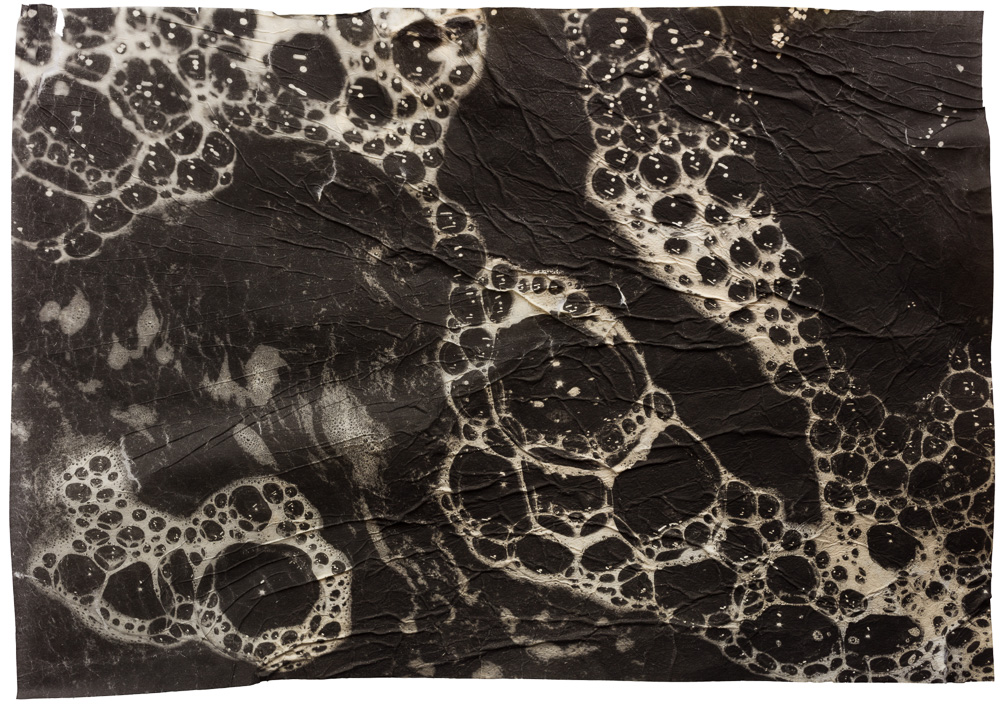
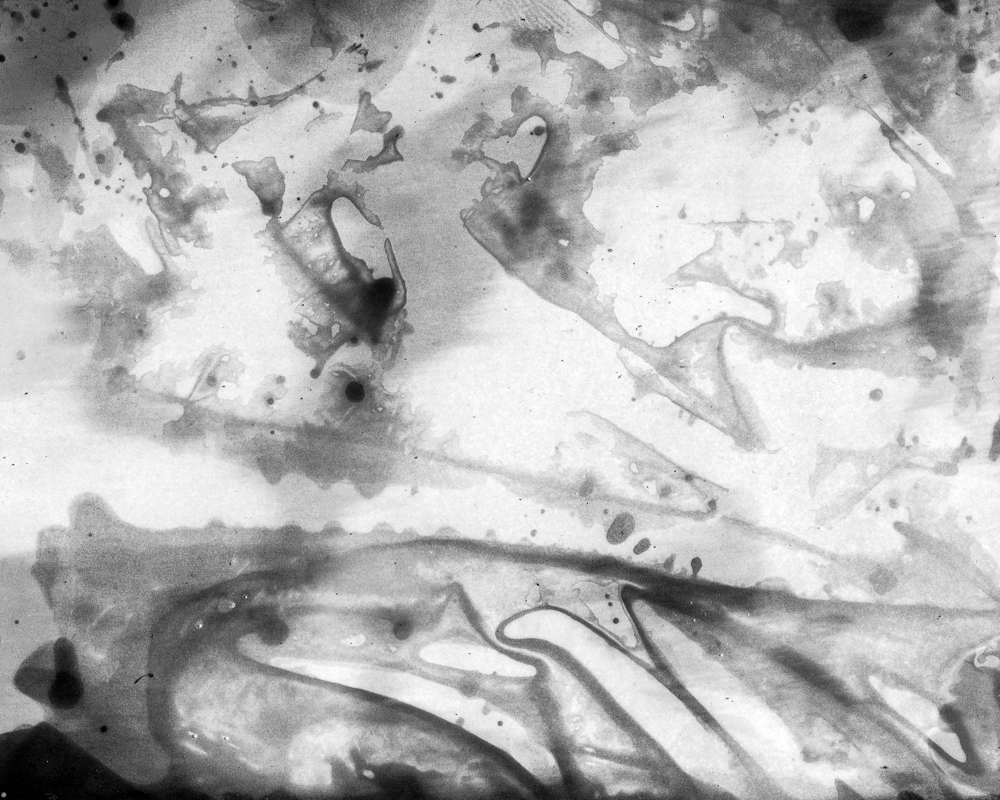
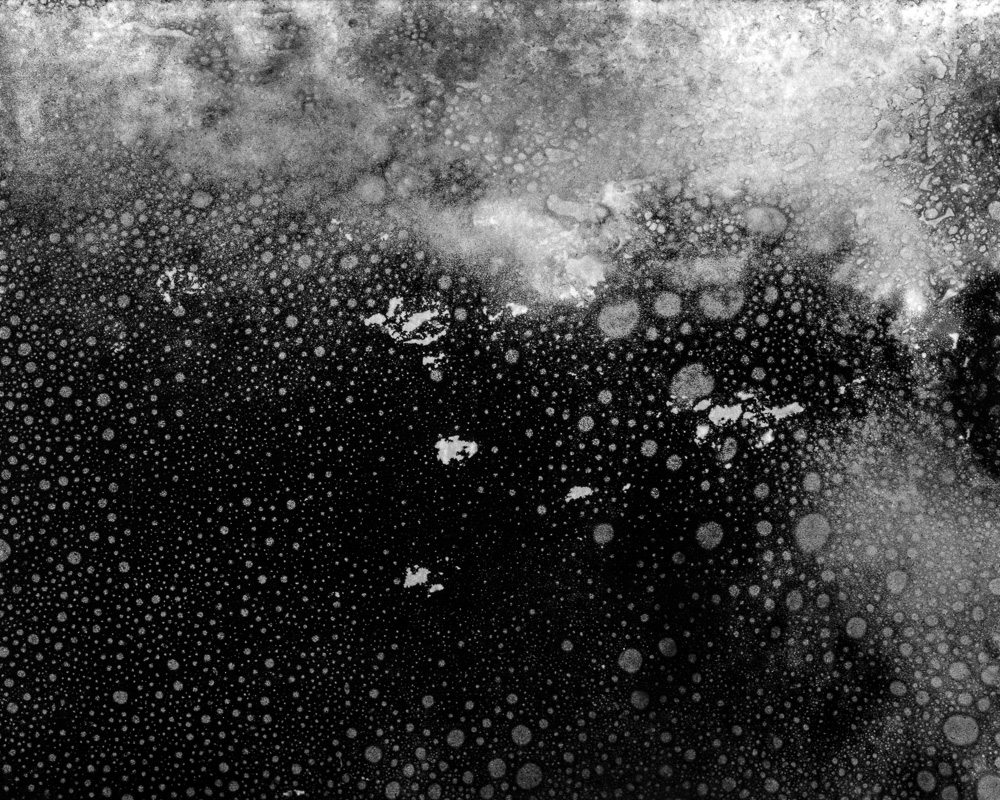
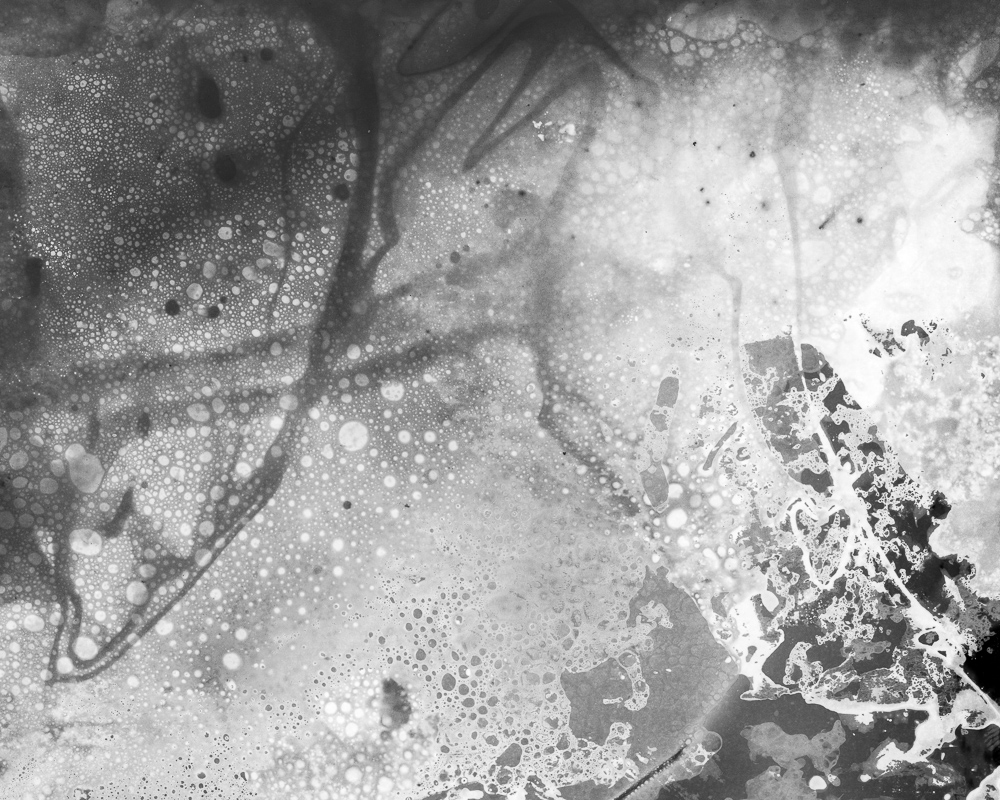
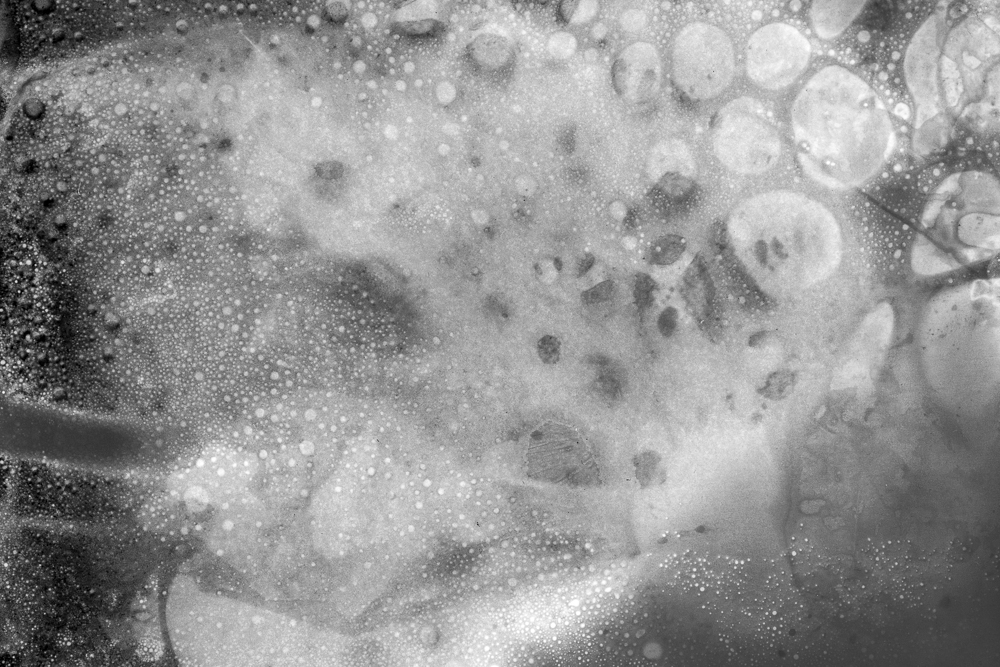
Complex photographs are paired against primitive photograms, a juxtaposition between the carbon intensity of new technology versus the old, matched by the violence of the river against the softness of the foam.
References
DERGES, Susan. 2010. Elemental. Gӧttingen: Steidl.
HORN, Roni. 2011. Another Water: The River Thames, for Example. Gӧttingen: Steidl.